A First Autumn Walk Through Familiar Streets
Plan your first autumn walk through familiar streets with a simple loop, seasonal things to notice and an easy way to shorten the route if needed.
The common mistake on a first autumn walk is to follow a summer route at the same pace, then miss the changes that make familiar streets feel different. A little planning for your first autumn walk can help you notice lower light, seasonal shopfronts and a comfortable place to pause, without turning a local stroll into a hunt for attractions.
Make this first outing a gentle introduction to the season, not a test of how much ground you can cover. Choose a familiar loop, add one small stretch you have not walked recently, and decide in advance what would make you shorten or change it.
Where should your first autumn walk begin?
Start somewhere easy to reach, such as your front gate, a familiar bus stop or the entrance to a local park. Choose a loop that brings you back to that point, so you can pause or head home without depending on transport at the far end.
Pick two or three streets you know, then add one connecting lane, path or courtyard you rarely use. Familiar surroundings make seasonal changes easier to spot, while the added stretch gives this first outing a modest sense of discovery. Keep the route flexible rather than drawing a line you feel obliged to complete.
How can autumn light shape the route?
Before setting off, notice where the afternoon light falls along streets you already know. If the sun is out, begin with it behind you where possible; if the sky is overcast, look for an open stretch or the brighter side of a square. You are not chasing perfect weather, just seeing how light alters familiar details.
Plan a sheltered lane or covered arcade for the return if the route includes an exposed stretch. This gives your first autumn walk a useful rhythm: open space for noticing changing colour, followed by a comfortable way back.
What should you notice on a first autumn walk?
Choose one seasonal detail before leaving, such as leaves gathering along a kerb, a change in café seating, a bakery door opening onto the pavement or a shop window shifting its display. One focus gives the walk a gentle thread without making it a checklist; let other details catch your attention too.
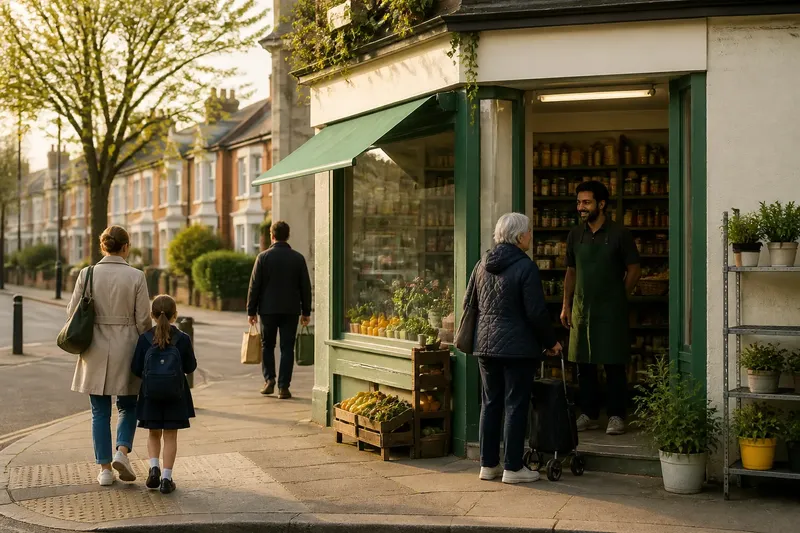
Keep your attention near eye level. A greengrocer may have arranged its produce differently, or a bookshop may have changed its window. If something catches your eye on a busy pavement, step into a doorway or a clear space before stopping to look.
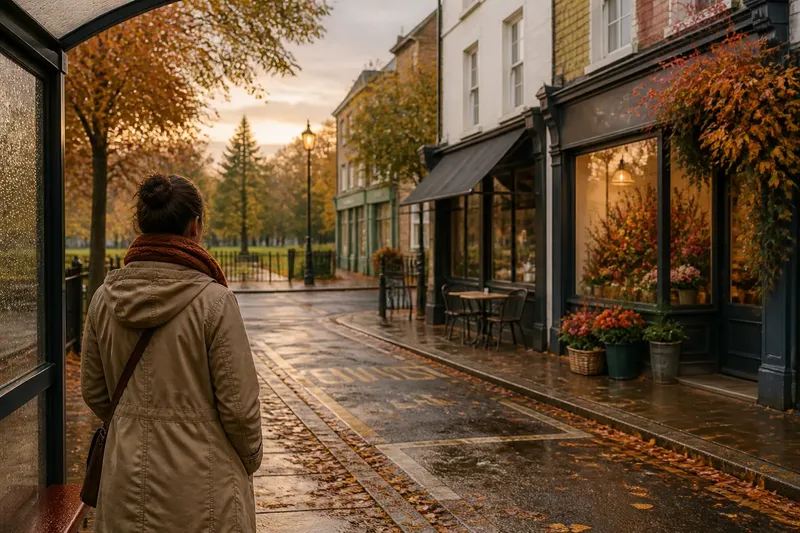
Say you choose changing shopfronts for this first outing. You pass a familiar row of businesses, notice a florist has brought autumn colours into its window, and pause across the road without blocking the entrance. The likely result is a more attentive walk; there is no need to expect every shop to have changed.
Where can you pause without turning the walk into an errand?
Choose a comfortable stopping point before you need one: a park bench, covered arcade, public square or café you already know. If the café is important to your plan, check its opening information and keep a nearby alternative in mind. Otherwise, treat the stop as optional and let the route remain enjoyable if the door is shut or the place is busy.
Use shopfronts as landmarks rather than a list of errands. A corner grocer, barber or community café can help you follow the loop, even if you do not go inside. A lit display does not necessarily mean a business is open, so check the door or posted hours before relying on it.
How should you account for leaves, rain and fading light?
Wet leaves can obscure uneven paving, while rain can make smooth stone or painted crossings slippery. Choose pavements and paths you know are comfortable for your footwear and mobility. If you use a pushchair or mobility aid, consider kerbs and crossings, and avoid shortcuts that become muddy or poorly lit after wet weather.
Check the forecast and dress for a possible change in temperature. A warm layer, a water-resistant coat and shoes with a secure grip are sensible starting points; adjust them to your comfort and the route. If the afternoon is fading or conditions worsen, take a familiar way home rather than pressing on.
What should you check before setting off?
How do I choose a suitable time?
Choose a time when you feel comfortable on the streets and there is enough daylight for the places you plan to pass. If you want to notice sunlight on buildings, consider the route at the time you expect to walk rather than assuming it will be bright all afternoon.
What should I wear for the route?
Use the forecast and the surfaces underfoot to guide your choice. A warm layer, rain protection and footwear with a steady grip are sensible starting points, adjusted for your own comfort and mobility.
Can I include a café without making the walk an errand?
Yes: make it an optional pause rather than the purpose of the outing. Check opening information if you are counting on a stop, and keep the rest of the loop pleasant if the café is closed or busy.
What if the weather changes while I am out?
Take the nearest familiar route home or pause somewhere open and comfortable while conditions pass. Avoid any path that has become slippery, flooded or poorly lit, even if it was part of your original plan.
How can you keep the first outing flexible?
Leave one short stretch unplanned, such as a side street visible from the pavement or a small green space. Before turning, decide what would make you stay on the main loop: a closed gate, poor lighting, a crowded path or a surface that feels unsuitable. A loose route is like a paper map with a finger over one corner: you know the direction but can still make a sensible choice.
- Check the pavement ahead: if leaves hide uneven paving, then stay on a clear familiar pavement instead of taking the covered stretch.
- Check the path surface: if rain has made a shortcut muddy or slippery, then use the surfaced street route instead.
- Check the lighting on the return: if the lane is dim or the afternoon is fading, then turn back by the brighter familiar road.
- Check the café door or posted hours: if it is closed or too busy for a comfortable pause, then continue to the park bench or head home.
- Check the crossing and kerbs: if they do not suit your mobility or pushchair, then choose the familiar crossing with a more manageable approach.
- Check how you feel as you walk: if you are cold, tired or ready to finish, then shorten the loop and take the direct route home.
Imagine you are setting out from a familiar bus stop on a damp afternoon. Your planned loop includes a park shortcut, a florist and a café; the forecast suggests more rain, and you notice wet leaves covering the park path near the entrance. You choose the surfaced street instead, pass the florist and see its autumn display from across the road, then find the café closed. You skip the stop and return along the brighter main street. The trade-off is a less adventurous route and no indoor pause, but you still notice a seasonal change and avoid a path that feels unsuitable.
What should you remember as you head home?
Choose one detail from this first outing that you would like to notice again: late light reaching a window, a new shop display or a sheltered bench that made a damp afternoon manageable. A brief note on your phone can help you remember it, without needing to record every turn.
For your next autumn walk, let that detail suggest one small change: take the brighter pavement, pause at a different corner or pass a shopfront from the opposite side. A first autumn walk through familiar streets works best when it gives you one clear thing to look forward to noticing again.