Market Stall or Independent Shop: Choosing Where to Browse for a Gift
Choose a market stall or independent shop for gift browsing by matching the setting to your available time, the conversation you want and how you find ideas.
The common mistake when choosing where to browse for a gift is treating a market stall and an independent shop as interchangeable. That can cost you the kind of outing you wanted: a focused search may turn into a long loop of stalls, or a leisurely wander may feel confined by a compact display. For market stall or independent shop gift browsing, start with the kind of discovery you want.
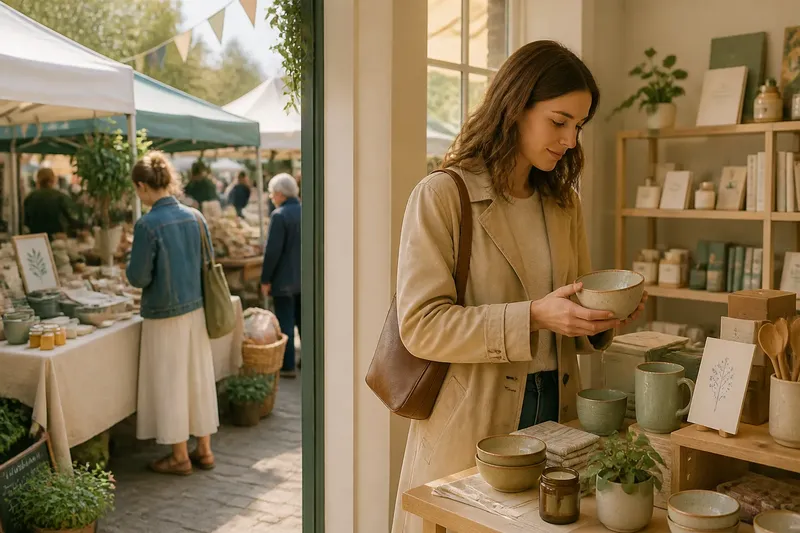
A stall is part of a changing, shared setting, with other traders and the market itself shaping the visit. A permanent shop offers a settled place to return to, with its selection gathered under one roof. Neither is automatically more personal or more interesting. It is like choosing a picnic table or a café seat: the setting changes how you spend the time, even if both could suit your plans.
What kind of gift discovery do you want?
At a market, discovery tends to happen as you move. You might spot a ceramic bowl at one stall, then notice hand-printed cards or local honey further along. The mix can help if you have no firm idea yet and want the surroundings to suggest possibilities.
That variety can also make browsing less focused. A stall has limited display space, and neighbouring sellers influence what catches your eye. If you want a particular kind of gift, diversions may not bring you closer to a decision.
In an independent shop, discovery often comes from how the stock has been selected and arranged. A bookseller might pair titles with notebooks, while a homeware shop might group textiles, candles and tableware. This can make it easier to follow a theme or compare related gifts without crossing a market.
The trade-off is that a shop’s selection reflects its owner’s choices. If the specialism suits the recipient, that focus can help. If you want an unexpected mix, a narrower range may feel less open-ended than a market.
When will a conversation help?
A stallholder may have made the item, sourced it or know its details well. In a quiet moment, you can ask how a print was produced, what care a plant needs or which flavours pair well. At a busy market, the seller may be serving several people, so a longer conversation may not be practical.
In a shop, conversation can be shaped by its subject. Staff may know how the stock is organised, what has arrived or which item suits a particular use. You can browse quietly too; a conversation is an option, not an obligation.
Decide what you need to know before asking. Try “Who made this?” or “What would you pair it with?” If you want to keep the gift a surprise, describe the intended use or general taste without naming the recipient.
How much time and browsing do you have?
A market visit suits wandering: you can look broadly, revisit a stall or pause for a drink if there is somewhere to sit. The layout and crowd affect the feel of the visit, so consider whether you enjoy moving through a shared public space.
A shop can offer a more contained browse. You can look through a selected range, ask a question and leave when you are ready. Some shops are compact; others invite a slower look. Check current opening arrangements if you are fitting the visit around errands.
Say you have a loose idea for a host gift and only a short window before meeting friends. Imagine the nearby shop has a food-and-homeware display, while the market takes a longer loop through several rows. You compare a serving dish with locally made preserves in the shop and choose a suitable option; with a free afternoon and no firm idea, the market’s variety might better suit your plans. These are invented details, not claims about any particular local business.
Which place fits your gift search?
- Check how many kinds of gifts you want to consider. If you want to browse several unrelated ideas, choose a market stall route; if you have a clear theme, try an independent shop. If neither seems suitable, check another local venue before setting out.
- Check whether the seller’s knowledge matters. If you want to ask a maker about an item, choose a relevant stall and ask who made it; if you need advice about a shop’s grouped stock, ask staff. If no one is free, browse labels or return later.
- Check how much time you have. If you have time to wander, choose a market; if your visit needs to stay contained, choose a shop. If opening times or market arrangements do not fit, reschedule or select another place.
- Check how you feel about a busy shared setting. If you enjoy moving among traders, choose the market; if you prefer a quieter, more contained browse, choose a shop. If either setting is busy, pause, browse at a quieter time or leave.
- Check whether you want the setting to suggest ideas. If you have no clear starting point, try a market’s changing mix; if you want a selection organised around an interest, try a shop. If neither sparks an idea, wait rather than forcing a purchase.
- Check current information before a special trip. If the market or shop confirms it is open and relevant stock is available, go ahead; if details are unclear or unsuitable, contact the seller or choose another day or place.
These choices are preferences, not fixed rules. Some markets have focused stalls, and some shops carry an eclectic mix. Check the seller’s or shop’s own current information for opening arrangements and the kinds of goods available.
What do gift browsers often ask?
Is a market stall better for handmade gifts?
A market can make it easier to encounter makers and ask about their work, but stalls differ in what they sell and how directly the seller is involved. Ask who made an item rather than assuming from the setting.
Is an independent shop easier for a last-minute gift?
A focused selection may make it simpler to compare options in one place if you already know what kind of gift you want. Check opening arrangements and current stock information before making a special trip.
Can I ask for gift advice without giving away the surprise?
Yes. Describe the intended use or general taste without naming the recipient, then ask about materials, care or possible pairings. You can also browse first and ask only about details that affect your choice.
What if I do not know what kind of gift I want?
Choose the setting you are more likely to enjoy exploring: a market for a mix of traders, or a shop whose subject interests you. If neither offers something that feels right, leave without buying.
How can you choose without overthinking it?
Start with the experience you want, rather than ranking which kind of local business is better. Ask whether you would rather follow unrelated discoveries or explore a selection organised around a shared interest. Then consider the time available, whether you want to speak with a seller and how you feel about a busy or contained setting.
For market stall or independent shop gift browsing, the useful question is not only what is for sale but how you want to arrive at an idea. A market can make an open-ended search feel like a local outing; a shop can keep a specific search contained. Check current details before setting off, and give yourself room to leave without buying if nothing suits.